

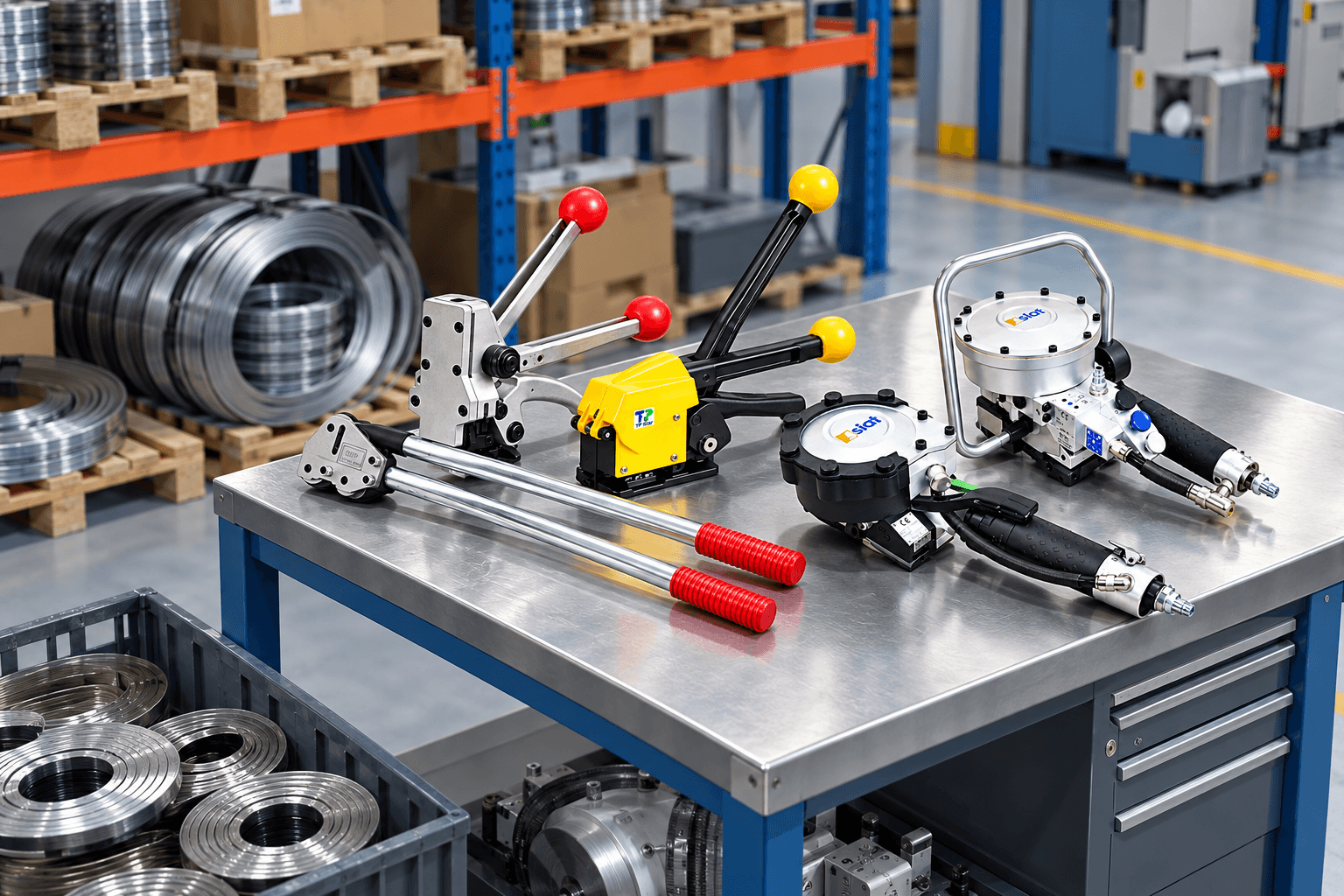
A tool is part of the packaging process
Industrial strapping tools do more than tighten and cut a strap. They influence joint quality, tension consistency, cycle time and operator comfort. When a tool is selected for the material, volume and working environment, the result is a more predictable pack and a smoother workflow on the floor.
The starting point is the strap type. Steel, PET and PP straps have different handling characteristics and joint methods. Selecting a tool simply by its power source can lead to poor seal performance or unnecessary effort. The tool, strap, seal and load profile should always be evaluated together.
When manual tools are the right fit
Manual tensioners, sealers and cutters remain practical where the work is varied, access is limited or daily volumes are modest. They are straightforward to deploy, can be effective in field or maintenance work and allow teams to manage many pack sizes without a complex setup.
Their limitations become visible when the same high-tension operation is repeated throughout a shift. Consistency may vary between operators, and repetitive force can affect comfort and pace. In those situations, reviewing a pneumatic or battery-operated option can be worthwhile.
Where powered tools add value
Pneumatic tools are commonly considered in fixed workstations with available air supply and frequent packaging cycles. Battery-operated strapping tools offer mobility and can support consistent tensioning where hoses or stationary equipment are impractical. The better option depends on the application, service access, duty cycle and the working conditions around the load.
Whichever route you choose, define the operating range clearly. Operators should know the approved strap sizes, required tension settings, inspection points and safe cutting procedure. Good training protects the product as well as the person using the tool.
- Use compatible straps, seals and replacement parts
- Set and verify tension for each approved load type
- Inspect cutters, sealing faces and wear parts regularly
- Store tools cleanly and protect batteries or air connections
Improve the workstation around the tool
Tool selection works best alongside a thoughtful workstation. Strap dispensers, reel holders, balancers and organised accessory storage reduce unnecessary reach, twisting and interruptions. These small improvements can make the process faster without asking operators to work harder.
Grip can help teams connect tools, accessories and strapping materials into a packaging workflow that suits their products. A short application review often identifies simple changes that improve both pack consistency and day-to-day usability.